[technology]
[May 18, 2026]
[4 min read]
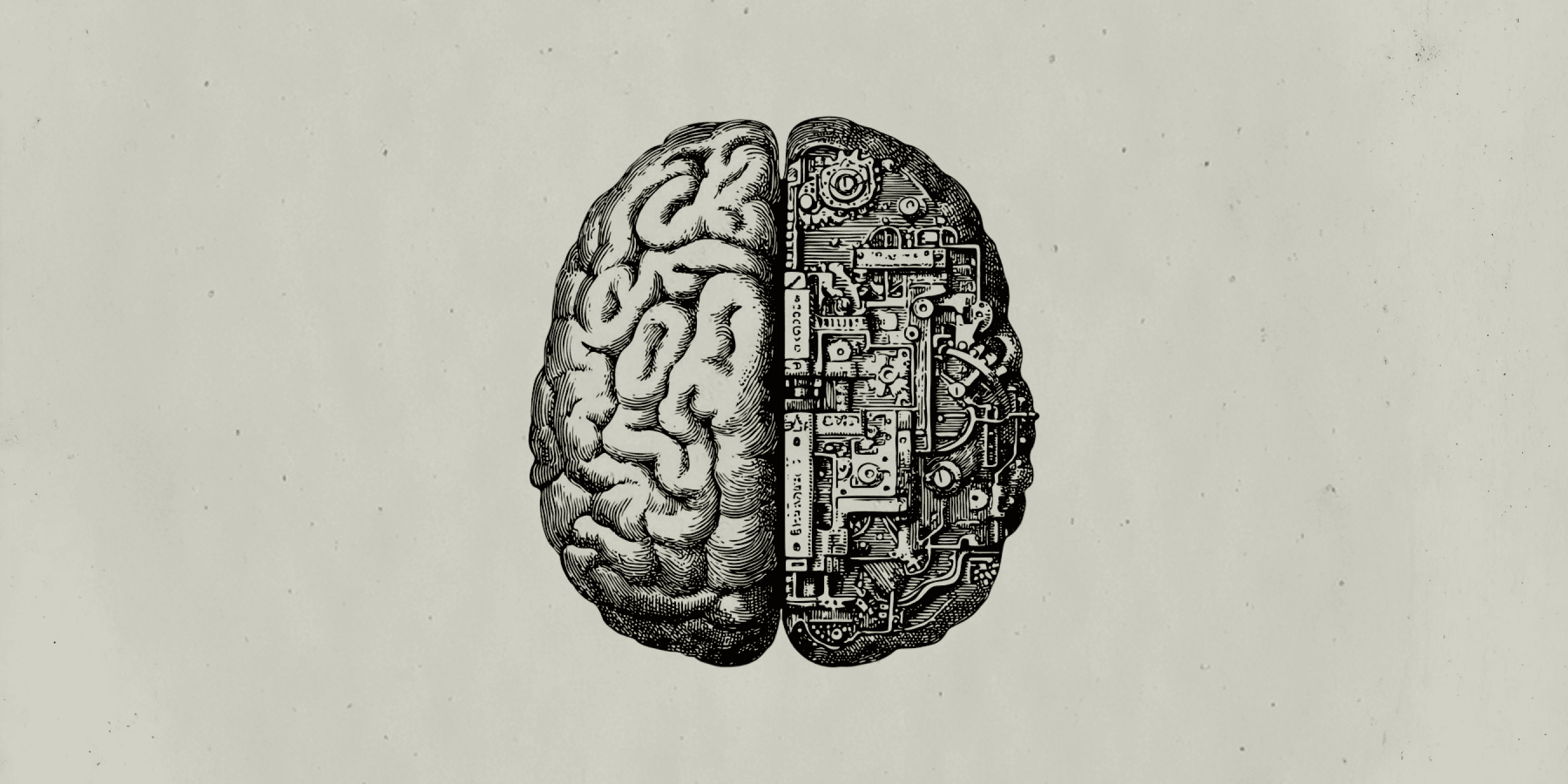
When an AI startup says "we won't use your personal data to train our models," do they actually mean it?
That question stuck with us for a long time.
It sounds reassuring on the surface. But the more we sat with it, the more uncomfortable we got. What that sentence really says is: "We have your data. We've decided not to use it for one specific purpose, for now." Your conversations, your routines, the small confessions you only make to an AI because it feels private – all of it is sitting on someone else's server, governed by a policy that can quietly change tomorrow with an email update you'll probably skim.
So we asked a simpler question: what if your AI's memory never left your phone in the first place?
That question became memlocal.
why AI memory matters?
AI assistants are getting better at remembering you. They remember your dog's name, that you're allergic to peanuts, that your mom's birthday is coming up, and that you've been job hunting for three months. This is genuinely useful. An assistant that remembers feels less like a search engine and more like someone who actually knows you.
But here's the catch. Almost every AI product today keeps that memory in the cloud. Your notes about a hard conversation with your partner, your health worries, your half-formed business ideas - they all get shipped to a server somewhere and entrusted to a privacy policy you didn't write.
Even when the company means well, this creates real problems. Policies change. Companies get acquired. Servers get breached. Governments make requests. And every one of these has the same root cause: your most personal data is not in your hands.
a different default
memlocal is built on a different default. Your AI's memory lives on your device. Not synced to the cloud. Not stored on a server. Not held by a vendor. Just on the phone or laptop in front of you.
Practically, this gives you three things:
Privacy. Your memories never leave your device. There's no server to leak, no company to trust beyond the app itself, no policy that can quietly change next quarter.
Speed. When your AI doesn't have to phone home to recall who you are, everything feels faster. The assistant just knows.
Offline. No signal, no problem. Your memory works on a plane, in a basement, in a village without coverage – wherever you actually happen to be.
how it works?
Think of memlocal as a small, well-organized notebook that lives inside an AI app. Every time the AI learns something about you – a preference, a fact, a connection between two things – it writes it down in this notebook. Later, when it needs to remember something, it doesn't dial a server. It just flips through its own notebook.
Under the hood, memlocal holds two kinds of memory at the same time. It remembers relationships between things (your sister Priya works at the same hospital where you had your surgery), and it remembers things by meaning (you mention "the place we went last summer" and it pulls up Goa). Put together, that's a lot closer to how human memory actually works than what most AI products do today.
All of this runs inside the app. No accounts. No cloud. No middleman.
where we are today?
memlocal is open source. The project lives on GitHub at github.com/memlocal/memlocal_core, and you can read more at memlocal.dev.
Right now, the library works with Dart and Flutter, which means developers building apps for iOS, Android, and desktop can drop it in today. We're actively working on ports to other languages and frameworks, so more developers can use memlocal inside whatever they're already building.
If you like what we're building, spend 16 seconds to star the GitHub repo, and reach out to us if you want to contribute. We'd love to hear from you.
Because we think the answer to "where does my memory actually live?" should be obvious.
It should live with you.

[you might also like]

at antimattr, we are inspired by those who chose greatness over ordinary and project mnemosyne is our first step towards that - voice computers to unlock more, so that you can focus on things that truly matters
[unveils Q4-2026]